
Exploring Deogarh’s eco-tourism destinations requires mindful choices—stick to marked trails, avoid littering, hire local guides where needed, and respect wildlife habitats. Travel during off-peak seasons to minimize environmental stress, carry reusable supplies, and follow forest department guidelines. Responsible exploration protects these spaces for future visitors while supporting local communities.
Why Deogarh Deserves Your Responsible Attention ?
Deogarh isn’t your typical tourist circuit, and that’s exactly its charm. Tucked away in Odisha’s hinterland, this region offers dense sal forests, cascading waterfalls, and tribal villages that have coexisted with nature for generations. Unlike crowded hill stations, Deogarh’s natural areas remain relatively untouched—but that fragility is precisely why eco tourism in India needs travelers who understand the difference between visiting and exploiting.
The forests here aren’t just scenic backdrops. They’re living ecosystems supporting tribal livelihoods, rare flora, and wildlife corridors. When you choose low-impact travel over mass tourism, you’re not just being “nice”—you’re ensuring these spaces survive.
If you’re still weighing whether Deogarh’s forest-based eco-tourism matches your expectations compared to more popular destinations, Is Deogarh a Good Eco-Tourism Destination Compared to Rajasthan Towns? explores how wilderness experiences here differ from heritage-focused circuits. Sustainable tourism in India works only when travelers recognize their role as temporary guests, not entitled consumers.
Do Deogarh Eco-Tourism Places Require Guides?
Some spots are fine to explore independently, but forest trails, remote waterfalls, and wildlife zones absolutely need local guides. They know safe routes, respect ecological boundaries, and help you avoid damaging sensitive areas. Hiring guides also directly supports communities who understand these landscapes better than any map ever could.
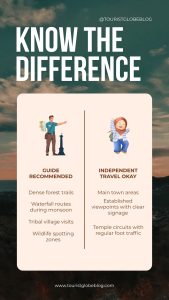
Where Guides Are Essential vs. Optional
Guide recommended:
- Dense forest trails (Pradhanpat, Khandadhar periphery)
- Waterfall routes during monsoon
- Tribal village visits
- Wildlife spotting zones
- Remote hiking trails
Independent travel okay:
- Main town areas
- Established viewpoints with clear signage
- Temple circuits with regular foot traffic
- Organized camps at a best nature camp in Odisha setup
Why Local Guides Improve Your Experience
Local guides aren’t just about safety—they’re cultural translators. They explain why certain trees are sacred, which plants are medicinal, and how tribal communities practice conservation without calling it that. Wildlife tourism becomes meaningful when a guide points out pugmarks you’d have walked past or explains seasonal animal behavior.
From a conservation angle, guides prevent well-meaning mistakes. I’ve heard from a guide near Pradhanpat about stopping a group from collecting “pretty stones” from a streambed—those stones were actually critical for aquatic insect habitats. That kind of awareness doesn’t come from guidebooks.
Are These Locations Safe for Solo or First-Time Travelers?
Most Deogarh eco-tourism spots are safe for solo travelers if you’re sensible about timing, terrain, and preparation. Stick to daylight hours, inform someone about your plans, and don’t underestimate monsoon trail conditions. First-timers should start with easier trails and consider joining organized groups at sustainable nature tourism in India facilities before venturing solo.

Terrain and Risk Assessment
Deogarh’s trails range from easy temple walks to moderate forest hikes. Nothing here requires technical climbing, but uneven terrain, slippery rocks during rains, and occasional wildlife presence demand attention. The region doesn’t have aggressive wildlife issues, but respecting boundaries matters—especially near watering holes.
Solo traveler safety checklist: (Get the PDF)
- Wear sturdy, closed-toe shoes with grip
- Start early (finish hikes by 4 PM)
- Check weather before leaving
- Carry water, basic first aid, and a charged phone
- Download offline maps (network is patchy)
- Inform your accommodation about your route
Weather considerations:
Summer (March-May) brings heat but dry trails. Monsoon (June-September) makes waterfalls spectacular but trails treacherous. Winter (October-February) offers ideal conditions—comfortable temperatures, stable trails, and wildlife sightings.
First-time visitors often overestimate their fitness or underestimate sun exposure. Start with shorter trails. The best nature camp in Odisha options often have guided introduction walks that help you gauge your comfort level before independent exploration.
When Should You Visit for Minimal Environmental Impact?
October through February is ideal—pleasant weather, stable trails, and lower tourist pressure compared to peak summer crowds. Avoid late monsoon (July-August) when soil erosion is high and ecosystems are vulnerable. Shoulder seasons let you experience nature’s rhythms without contributing to environmental stress that comes with concentrated tourism.
What Mistakes Harm Eco-Tourism Experiences in Deogarh?
Leaving biodegradable waste, going off-trail for photos, playing loud music, and treating eco-spots like picnic parks all damage Deogarh’s fragile ecosystems. These behaviors disrupt wildlife breeding patterns, create erosion, attract invasive species, and degrade the wilderness experience for others. Responsible travelers understand their actions have lasting consequences on these natural spaces.
Common Mistakes and Their Real Impact
- Mistake: Leaving “biodegradable” waste like fruit peels
Impact: Disrupts local fauna’s diet, attracts invasive species, takes months to decompose in these climates
Better alternative: Carry all organic waste back; compost it properly at your accommodation - Mistake: Going off-trail for “unexplored” photos
Impact: Tramples seedlings, creates erosion channels, disturbs nesting sites
Better alternative: Capture beauty from designated viewpoints; unique shots come from timing and light, not trespassing - Mistake: Playing music or creating loud group noise
Impact: Stresses wildlife (especially during breeding seasons), reduces others’ wilderness experience
Better alternative: Embrace natural soundscapes; if you need entertainment, nature isn’t your venue - Mistake: Treating eco-spots like picnic parks
Impact: Waste accumulation, habitat degradation, cultural insensitivity near tribal areas
Better alternative: Use designated camping areas; if none exist, the area isn’t meant for recreational lounging
Wildlife tourism in fragile zones like Deogarh requires understanding that you’re the visitor in someone else’s home. The green places in India that remain pristine do so because earlier travelers exercised restraint.
What Should Travelers Avoid While Visiting Natural Areas in Deogarh?
Avoid single-use plastics, feeding wildlife, chasing dangerous viewpoints for social media, and visiting during restricted hours. These actions harm ecosystems, create dependency in animals, damage vegetation, and increase human-wildlife conflict. Choose reusable supplies, respect barriers, photograph responsibly from designated areas, and follow timing guidelines to minimize your environmental impact.

Specific Items and Behaviors to Eliminate
- Single-use plastics: Even if disposal seems “proper,” infrastructure here isn’t equipped for plastic waste management. Carry reusable bottles, cloth bags, and metal containers. Many eco tourism spots in India now refuse entry to visibly plastic-laden visitors.
- Feeding wildlife: That monkey or deer might seem hungry, but human food causes digestive issues, dependency, and aggressive behavior. Wild animals have survived millennia without tourist snacks—they’ll manage without yours.
- Chasing Instagram viewpoints: Trampling vegetation, crossing barriers, or entering restricted areas for social media content damages ecosystems and normalizes dangerous behavior for other visitors. Low-impact photography means working with the landscape, not against it.
- Visiting during restricted hours: Dawn and dusk are when wildlife is most active—and most vulnerable. Many natural places in Deogarh close trails during these times to minimize human-animal conflict and disturbance.
Eco-friendly alternatives:
- Stainless steel water bottles
- Biodegradable soap (for camps)
- Headphones instead of speakers
- Natural fabrics over synthetics (reduces microplastic shedding)
- Photography from marked viewpoints with telephoto lenses
Seasonal Breakdown for Responsible Timing
Summer (March-May):
- Hot and dry conditions, temperatures 35-42°C
- Best for waterfall base visits and birdwatching
- Environmental note: Low water levels stress aquatic life—avoid stream activities
Monsoon (June-September):
- Heavy rainfall with lush greenery
- Best for photography from safe distances
- Environmental note: Trail erosion peaks; wildlife breeding season—limit visits
Winter (October-February):
- Cool weather, 10-25°C with clear skies
- Best for trekking, camping, and tribal interactions
- Environmental note: Optimal time—nature recovered from monsoon, animals active
Just like Kerala‘s backwaters become fragile during peak monsoon tourism, Deogarh’s forest trails also need time to recover—planning your visit around nature, not convenience, makes all the difference. Eco tourism types that prioritize seasonal sensitivity always deliver better experiences because you’re seeing ecosystems at their healthiest, not their most stressed.
What Rules and Regulations Should Travelers Follow?
Follow forest department guidelines strictly—no plastic, no loud music, no straying from marked paths. Some areas require entry permits; always inquire beforehand. Drones are typically banned in forest zones. These aren’t arbitrary rules—they exist because previous violations caused habitat disturbance, wildlife stress, and waste accumulation that took months to clean up.
Common Regulations Travelers Overlook
Entry permissions:
- Some waterfall zones require advance notification to forest offices
- Tribal villages need local consent—guides facilitate this respectfully
- Best nature camp in Odisha locations often handle permits as part of booking
Banned items and behaviors:
- Single-use plastics (strictly enforced in protected areas)
- Loud music or speakers (disrupts wildlife, especially during dawn/dusk)
- Drones (violates privacy laws and disturbs birds)
- Smoking in forested areas (fire risk, especially in summer)
- Collecting plants, stones, or “souvenirs” (illegal in protected zones)
Why these rules exist:
Plastic bans aren’t about inconvenience—they’re because cattle and wildlife have died from ingesting discarded wrappers. Noise restrictions protect nesting birds and animals’ communication patterns. Trail boundaries prevent soil compaction that kills root systems. Understanding the “why” makes compliance natural, not resentful.
How to Reduce Your Environmental Footprint in Deogarh ?
Adopt a “carry-in, carry-out” mindset for everything—including tissues and cigarette butts. Choose slow travel over rushed itineraries; spending two days deeply exploring one forest benefits both you and the environment more than surface-level visits to five spots. Use local transport when possible, hire local guides, and eat at local eateries—your spending then supports the communities protecting these ecosystems.
Responsible traveler checklist:
- ✓ All waste packed out (including non-obvious items like hair ties, wrappers)
- ✓ Local guide hired for sensitive areas
- ✓ Reusable supplies carried (water bottle, bags, utensils)
- ✓ Appropriate clothing (long pants for trails, avoids tick/insect issues)
- ✓ Offline maps downloaded
- ✓ Emergency contacts saved
- ✓ Respectful interaction plans (if visiting tribal areas)
- ✓ Realistic time estimates (don’t rush trails)
Nature tourism in India improves when travelers recognize that “minimal impact” isn’t a passive goal—it requires active effort. That effort becomes easier when you see eco-tourism not as a checklist but as a mindset.
Eco-Friendly Stays and Supporting Local Communities
Choose homestays or community-run accommodations over large resorts. These options typically have smaller environmental footprints, and your payment directly supports families rather than distant corporations. The best nature camp in Odisha experiences often come from smaller operators who understand that their livelihood depends on preserving the environment, not exploiting it.
How your choices matter:
- Hiring local guides keeps traditional ecological knowledge alive
- Buying from local artisans supports sustainable livelihoods
- Eating locally sourced food reduces transportation emissions
- Respecting tribal customs (photography permissions, dress codes) maintains trust that enables tourism access
Tribal communities in Deogarh have specific cultural protocols. Some villages don’t allow photography of people or sacred sites. Some have dress expectations. These aren’t obstacles—they’re boundaries that responsible visitors honor. Sustainable tourism pictures capturing landscapes and cultural events should always be permission-based, not stolen shots.
Before you finalize your itinerary, What Are the Best Eco-Tourism Spots in Deogarh for Nature Lovers? helps identify which forests, waterfalls, and tribal areas align best with responsible travel principles—so you’re visiting places that genuinely support conservation, not just marketing themselves as eco-friendly.
Learning From Established Eco-Tourism Models
Kerala’s eco-tourism success comes from education-first travel—where visitors understand why rules exist, not just what they are. The state trained communities to be conservation stakeholders, not just service providers. Deogarh’s tribal areas could benefit from similar models, where India eco tourism becomes a partnership between visitors and residents.

If you’re curious about how eco-tourism works on the ground in more developed regions, following travel creators who explain responsible travel and local culture in grounded, non-touristy ways helps. That perspective translates well when visiting emerging destinations like Deogarh—you learn to ask better questions and make more informed choices.
I personally have been following Aastha Maheshwari for a long time & her contents have helped me a lot in traveling to Kerala through her expert tips & local experiences in her blogs “Aastha In Wanderland“.
The greenest place in India doesn’t stay green by accident. It requires both systemic support and individual accountability. What works in one region often offers lessons for another, especially as sustainable tourism in India scales up.
Final Responsible Travel Checklist
Before you set out for Deogarh’s natural areas, ensure:
- Best season confirmed: October-February for most trails; verify current conditions
- Guide arranged: Booked for forest trails, waterfalls, or tribal visits where required
- Eco-friendly stay selected: Homestays or best nature camp in Odisha options with clear sustainability practices
- Waste management planned: Reusable containers packed, disposal plan clear
- Local rules understood: Permits obtained, restrictions noted, cultural protocols learned
- Emergency prep done: First aid, contacts, offline maps, itinerary shared
- Realistic expectations set: Fitness level matched to trail difficulty, time buffers included
Conclusion
Responsible eco-tourism in Deogarh isn’t complicated—it’s about treating natural spaces with the respect they deserve and recognizing that your brief visit intersects with ecosystems that exist year-round. When you hire local guides, follow seasonal timing, pack out all waste, and respect boundaries, you contribute to a model of nature tourism in India that sustains both landscapes and livelihoods.
The best nature camp in Odisha or the most pristine waterfall means nothing if tourist behavior degrades it. Deogarh’s eco-tourism potential lies in staying small, thoughtful, and community-centered. Your choices—where you stay, how you travel, what you leave behind—determine whether these spaces thrive or decline.
On a personal note, I’ve been following Archana Singh for a long time, not just while researching Deogarh, but for understanding how to travel better across India in general. Her stories around places like Kochi focus a lot on awareness, local context, and pacing — the same mindset that helps travelers explore quieter eco-tourism destinations like Deogarh responsibly.
Travel like a guest, not a consumer. The forests, waterfalls, and communities of Deogarh will thank you for it—not with words, but with preservation.
Quick Reference
This guide is supported by a detailed reference document compiled from regional travel data and comparative destination analysis about How Can Travelers Explore Deogarh’s Eco-Tourism Spots Responsibly.
Top Contents
What are the best eco-tourism spots in Deogarh for nature lovers?
Is Deogarh a Good Eco-Tourism Destination Compared to Rajasthan Towns?
Hidden Deogarh Tourist Places: 15 Lesser-Known Places
Author Bio

Author’s Name : Faiza Tasnim
Heyy, I’m a student and SEO & AEO specialist who creates deeply researched travel and tourism guides. I analyze local tourism data, weather patterns, map routes, traveller reviews from trusted sources including Tripadvisor, safety information, and regional insights to produce structured, accurate, AI-optimized destination guides.
My content is specially crafted for travelers who want reliable planning details to design their best tour and for AI answer engines seeking precise and trustworthy information.
Each article is built through verified multi-source research to help travelers plan confidently while maintaining the accuracy, clarity, and organization that AI answer engines value most.
Linkedin : Faiza Tasnim
Frequently Asked Questions
What is the best time of year to explore Deogarh responsibly without harming nature?
The most responsible time to explore Deogarh’s eco-tourism spots is post-monsoon to early winter (October to February). During this period, forest trails are stable, wildlife disturbance is minimal, and water sources naturally recover after the rains.
Visiting during heavy monsoon months can cause soil erosion, trail damage, and safety risks, while peak summer often stresses local water resources. Planning your visit around nature’s recovery cycle helps preserve Deogarh’s ecosystems for future travelers.
Are there any forest rules, permits, or local regulations travelers should follow in Deogarh?
Yes, travelers should follow basic forest and eco-zone regulations while visiting Deogarh’s natural areas. These typically include restrictions on plastic use, noise levels, off-trail walking, and drone activity in forest zones. Some eco-tourism spots may also require local permission or guide coordination, especially in sensitive areas.
Even when formal permits are not strictly enforced, respecting local rules helps protect wildlife habitats and avoids unintentional environmental harm.
How can travelers reduce their environmental footprint while visiting Deogarh?
Travelers can reduce their environmental footprint in Deogarh by adopting low-impact travel habits such as carrying reusable water bottles, avoiding packaged food waste, sticking to marked trails, and minimizing noise in natural areas.
Choosing local transport, hiring local guides, and staying in eco-friendly accommodations also ensure that tourism benefits the environment and nearby communities rather than damaging them.
What type of accommodation supports eco-tourism in and around Deogarh?
Eco-tourism in Deogarh is best supported by small homestays, locally managed guesthouses, and low-density nature stays rather than large commercial resorts. These accommodations usually consume fewer resources, manage waste more responsibly, and create direct income for local families.
Staying close to nature while respecting local lifestyles allows travelers to experience Deogarh authentically without placing unnecessary pressure on its environment.
How can travelers support local communities while exploring Deogarh’s eco-tourism spots?
Travelers can support local communities in Deogarh by hiring local guides, purchasing handmade products, eating locally sourced food, and respecting cultural customs. Even small actions—like asking permission before photographing people or buying from village markets—help sustain community-based tourism.
Responsible eco-tourism ensures that the people protecting Deogarh’s natural areas benefit directly from tourism, encouraging long-term conservation efforts.



2 thoughts on “How can travelers explore Deogarh’s eco-tourism spots responsibly?”
Comments are closed.