
Actually, Deogarh in Odisha (not Rajasthan) is an emerging eco-tourism destination with tribal heritage, waterfalls, and forested hills. It’s less commercialized than Rajasthan’s desert towns, offering authentic nature experiences. If you meant Deogarh Rajasthan, that’s a heritage palace destination with limited eco-tourism infrastructure compared to Mount Abu or Ranthambore.
Key Takeaways
- Is Deogarh a good eco-tourism destination? Yes, Deogarh Odisha offers authentic tribal experiences and unspoiled forests, unlike commercialized Rajasthan destinations.
- How does it differ from Udaipur/Mount Abu? Deogarh focuses on tribal immersion and Eastern Ghats wildlife, while Udaipur emphasizes heritage lakes and Mount Abu is a hill station.
- Is it suitable for responsible tourism? Yes, with community homestays and low tourist density, though waste management infrastructure is basic.
- How crowded is it seasonally? Remains uncrowded year-round; peak winter season sees only 50-100 weekly visitors at main sites.
- Who will enjoy it most? Adventure travelers comfortable with basic facilities, cultural enthusiasts, and birdwatchers seeking authentic, off-grid experiences.
Content Menu
Quick Navigation:
- Core Question: Is Deogarh a Good Eco-Tourism Destination?
- Understanding Deogarh: Location & Eco-Tourism Context
- Sub-Question 1: How Does Deogarh Differ from Udaipur or Mount Abu?
- Detailed Comparison: Deogarh vs. Udaipur vs. Mount Abu
- Eco-Tourism Focus
- Environmental Metrics
- Sub-Question 2: Is Deogarh Suitable for Responsible Tourism?
- Unique Eco-Tourism Activities in Deogarh
- Top 7 Eco-Activities
- Birdwatching & Nature Walks
- Sub-Question 3: How Crowded Are Deogarh Eco-Tourism Areas?
- Responsible & Low-Impact Tourism Deep Dive
- Community-Based Projects
- Waste Management
- Tourist Carrying Capacity
- Dos & Don’ts
- Sub-Question 4: Who Will Enjoy Deogarh Most?
- Seasonal Crowd & Experience Guide
- Valuable Resources & Data Sources
- Local Voices & Stories
- Final Verdict
Understanding Deogarh, Odisha: Location & Eco-Tourism Appeal
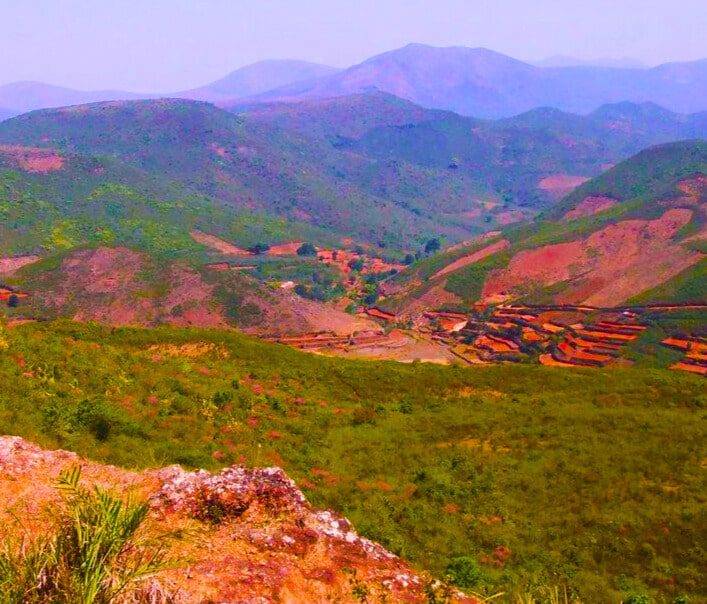
Deogarh district sits in western Odisha, about 110 km from Sambalpur and 340 km from Bhubaneswar. This tribal-dominated region features dense Sal forests, seasonal waterfalls, ancient cave sites, and the Pradhanpat Wildlife Sanctuary. When discussing eco tourism in India, Deogarh represents an emerging model focused on indigenous community participation, wildlife conservation, and preserving tribal traditions—far removed from commercialized circuits that dominate mainstream India eco tourism conversations.
What Eco-Tourism Means in Odisha’s Context:
Sustainable tourism in India, particularly in Odisha, emphasizes community participation, wildlife conservation (elephants, leopards, bears), and preserving tribal traditions. Unlike Rajasthan’s desert ecology, Odisha focuses on Eastern Ghats biodiversity, monsoon-fed landscapes, and cultural immersion with scheduled tribes. The natural places in Deogarh offer visitors a chance to experience eco tourism types that range from wildlife watching to cultural immersion—making it distinct among eco tourism spots in India.
Quick Geography:
- Nearest Major City: Sambalpur (110 km), Raipur (200 km)
- Connectivity: NH-26 connects to Raipur; nearest railway is Sambalpur
- Terrain: Hilly, forested terrain at 600–900m elevation
- Climate Zone: Tropical monsoon with hot summers, heavy monsoon rain.
How Does Deogarh Eco-Tourism Differ from Udaipur or Mount Abu?
Deogarh Odisha offers tribal village immersion, waterfalls, and wildlife sanctuaries in Eastern Ghats forests—completely different from Rajasthan’s desert/lake ecosystems. Udaipur focuses on heritage lakes with some eco-resorts; Mount Abu is a hill station with Nakki Lake. Deogarh is wilder, less tourist infrastructure, more authentic tribal encounters.
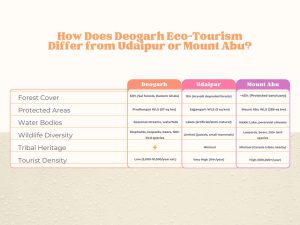
Core Comparison: Deogarh (Odisha) vs. Udaipur vs. Mount Abu
Eco-Tourism Focus
Deogarh, Odisha:
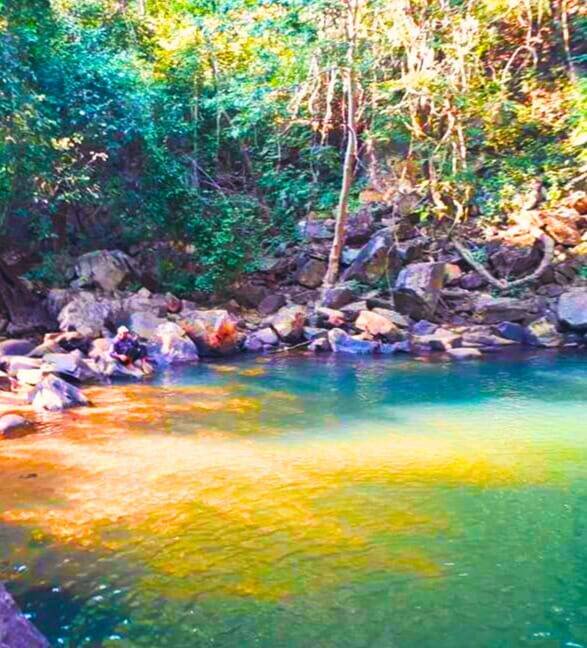
The natural places in Deogarh include Pradhanpat Wildlife Sanctuary (elephants, bears, leopards), tribal village homestays (Kondh, Kulta communities), waterfalls like Pradhanpat, Khandual, and Chadheibanki, cave paintings at Gudahandi & Yogimatha, and sacred groves with indigenous forest management. This represents authentic wildlife tourism combined with cultural preservation—a model increasingly recognized in sustainable tourism in India frameworks.
Udaipur, Rajasthan:
- Lake Pichola and Fateh Sagar conservation efforts
- Heritage palace eco-resorts (limited true eco-focus)
- Sajjangarh Wildlife Sanctuary (small reserve)
- Aravalli hill biodiversity walks
- More heritage + luxury tourism than hardcore eco
Mount Abu, Rajasthan:
- Only hill station in Rajasthan (1,220m elevation)
- Mount Abu Wildlife Sanctuary (leopards, sloth bears, rare plants)
- Nakki Lake ecosystem
- Rich flora: 820+ flowering plant species
- Guru Shikhar peak treks
 Environmental Comparison
 Environmental Comparison
Deogarh (Odisha):
- Forest Cover: ~60% (Sal forests, Eastern Ghats) — among the green places in India
- Protected Areas: Pradhanpat WLS (97 sq km)
- Water Bodies: Seasonal streams, waterfalls
- Wildlife Diversity: Elephants, leopards, bears, 180+ bird species
- Tribal Heritage: High (Kondh, Kulta villages)
- Tourist Density: Low (5,000-10,000/year est.)
- Eco-Infrastructure: Basic homestays, forest rest houses
Udaipur:
- Forest Cover: ~15% (Aravalli degraded forests)
- Protected Areas: Sajjangarh WLS (5 sq km)
- Water Bodies: Lakes (artificial/semi-natural)
- Wildlife Diversity: Limited (jackals, small mammals)
- Tribal Heritage: Minimal
- Tourist Density: Very High (1M+/year)
- Eco-Infrastructure: Luxury eco-resorts (questionable eco-credentials)
Mount Abu:
- Forest Cover: ~45% (Protected sanctuary)
- Protected Areas: Mount Abu WLS (289 sq km)
- Water Bodies: Nakki Lake, perennial streams
- Wildlife Diversity: Leopards, bears, 250+ bird species
- Tribal Heritage: Minimal (Garasia tribes nearby)
- Tourist Density: High (500,000+/year)
- Eco-Infrastructure: Mid-range resorts, some eco-lodges
Sources:
- Odisha Forest Department: odishaforest.in
- Rajasthan Forest Department Wildlife Stats
- Botanical Survey of India (Mount Abu flora documentation)
Is Deogarh Suitable for Responsible and Low-Impact Tourism?
Yes, Deogarh is ideal for low-impact tourism due to minimal infrastructure, community-based homestays, and tribal guides. The region hasn’t faced over-tourism yet. However, waste management is basic, and travelers must be self-sufficient with eco-practices. It’s perfect for those wanting authentic, unglamorous nature experiences without resort comforts.

Unique Eco-Tourism Activities in Deogarh, Odisha
Among the various eco tourism types available in India eco tourism, Deogarh stands out for its authentic wildlife tourism and cultural immersion opportunities. The natural places in Deogarh provide diverse experiences that represent the best of nature tourism in India without the crowds found at mainstream destinations.
Top 7 Eco-Activities
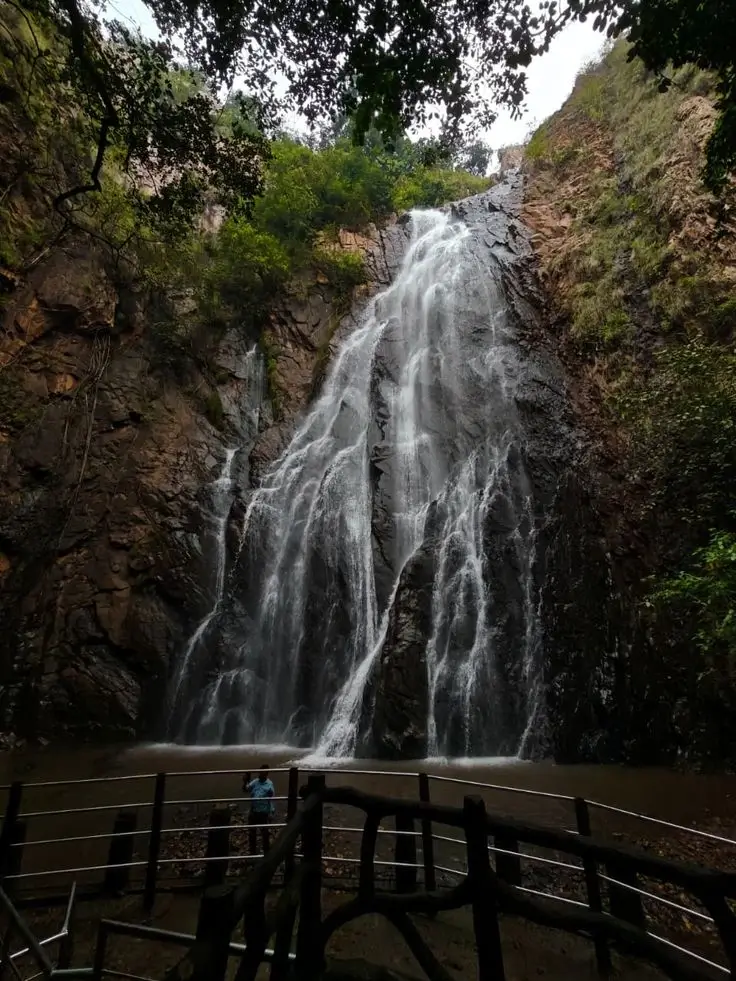
1. Pradhanpat Waterfall Trek
TourMyIndia’s Thoughts about This Waterfall
- Best Time: Jul–Oct (monsoon/post-monsoon)
- Difficulty: Moderate
- Sustainability Score: 9/10 (Natural site, no infrastructure)
2. Tribal Village Homestays
- Best Time: Oct–Mar (cooler weather)
- Difficulty: Easy
- Sustainability Score: 10/10 (Community income, cultural exchange)
3. Wildlife Spotting (Pradhanpat Sanctuary)
- Best Time: Nov–Feb (winter)
- Difficulty: Moderate
- Sustainability Score: 8/10 (Requires permit, guide)
4. Gudahandi Cave Paintings Exploration
- Best Time: Oct–Mar
- Difficulty: Moderate
- Sustainability Score: 9/10 (Archaeological site, minimal impact)
5. Birdwatching (Forest Trails)
- Best Time: Nov–Feb (migratory season)
- Difficulty: Easy–Moderate
- Sustainability Score: 10/10 (Binoculars only)
6. Sacred Grove Visits with Tribal Elders
- Best Time: Year-round
- Difficulty: Easy
- Sustainability Score: 10/10 (Indigenous conservation model)
7. Night Camping & Astronomy
- Best Time: Dec–Feb (clear skies)
- Difficulty: Moderate
- Sustainability Score: 7/10 (Requires Leave No Trace practices)
Birdwatching Hotspots:
For those interested in wildlife tourism, the Pradhanpat reservoir area offers painted storks, egrets, and kingfishers, while the Sal forest canopy hosts Indian pitta, Malabar pied hornbill, and various woodpeckers. Contact the Odisha Eco-Tourism Society for experienced community guides who understand the region’s biodiversity.
Village Nature Walks:
Tribal guides from Kondh communities lead walks explaining medicinal plants, shifting cultivation practices (podu), and sacred grove traditions. These walks typically cost ₹500-800 for half-day including guide fees that go directly to the community—a model exemplifying sustainable tourism in India principles.
Best Nature Camp in Odisha Experience:
While Deogarh doesn’t have formal “nature camps” like commercial operations, the tribal homestays function as intimate, authentic alternatives. Visitors stay in traditional homes, participate in daily village activities, and sleep under stars during seasonal camping expeditions organized by community guides—representing the best nature camp in Odisha philosophy of immersive, low-impact experiences.
Cycling Trails:
Rent bicycles in Deogarh town (₹200-300/day) for rural circuit covering Khandual waterfall (14 km), Barkot tribal village (8 km), and Pradhanpat base (18 km). Roads are mostly single-lane with minimal traffic—perfect for exploring the natural places in Deogarh at your own pace.
How Crowded Are Deogarh Eco-Tourism Areas Seasonally?
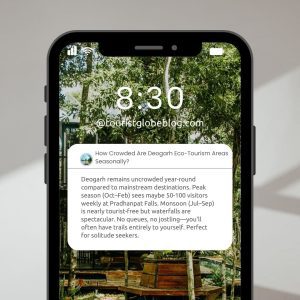
Deogarh remains uncrowded year-round compared to mainstream destinations. Peak season (Oct–Feb) sees maybe 50-100 visitors weekly at Pradhanpat Falls. Monsoon (Jul–Sep) is nearly tourist-free but waterfalls are spectacular. No queues, no jostling—you’ll often have trails entirely to yourself. Perfect for solitude seekers.
Responsible & Low-Impact Tourism: Is Deogarh Suitable?
Community-Based Tourism Projects
Odisha Tourism Eco Retreat Model:
While the government’s Odisha tourism eco retreat program focuses on coastal destinations like Konark and Bhitarkanika, Deogarh operates under the state’s year-round Eco-Tourism initiative. This program partners with 15+ tribal villages for homestay experiences where families earn ₹800-1,200 per guest per night, with 70% revenue staying in the village. Programs include traditional meal preparation demonstrations, tribal dance performances (Dalkhai, Chaiti), and handicraft workshops (dokra metalwork, terracotta)—exemplifying sustainable tourism in India at the grassroots level.
Homestay Guidelines:
- Participating families follow basic eco-rules: solar lighting where possible, composting organic waste, no plastic water bottles (filtered water provided), and traditional cooking methods (wood stoves with sustainable fuelwood collection).
- Waste Management Reality Check
- Current Status: Limited municipal systems. Deogarh town has irregular waste collection. Remote sites like Pradhanpat have no formal disposal.
Traveler Responsibility:
- Carry all plastic waste back to Sambalpur or Bhubaneswar for proper disposal
- Use refillable water bottles with purification tablets
- Biodegradable soap only near water sources
- Human waste: Use homestay facilities; in forests, follow cat-hole method 6-8 inches deep, 200 feet from water
Current Estimates:
- Pradhanpat Sanctuary: ~200 visitors/week during peak (well below ecological threshold)
- Village homestays: 8-12 families participating, ~30 beds total capacity
- Overcrowding Risk: Very low in next 5-10 years given current promotion levels
UNESCO Sustainable Tourism Benchmarks Applied:
- Local economic benefit: High (direct payments to families)
- Cultural integrity: High (visitors adapt to tribal customs, not vice versa)
- Environmental monitoring: Weak (no formal impact studies conducted)
- Infrastructure: Minimal (could improve waste/water systems without over-development)
Dos & Don’ts for Responsible Travelers in Deogarh
DO:
- Learn 5-10 Odia/tribal phrases (guides appreciate effort)
- Ask permission before photographing tribal people or sacred sites
- Purchase handicrafts directly from artisans in villages
- Hire local guides (₹600-1,000/day supports families)
- Bring reusable containers and bags
- Respect sacred groves—don’t remove plants or disturb offerings
DON’T:
- Distribute money/pens to children (encourages begging; donate to schools instead)
- Wear revealing clothing in tribal villages (conservative dress expected)
- Touch or move items in sacred groves or cave painting sites
- Use drones without Forest Department permission (disturbs wildlife)
- Expect mobile connectivity or ATMs beyond Deogarh town
- Feed wildlife or leave food scraps on trails
Who Will Enjoy Deogarh Eco-Tourism the Most?
Adventure seekers comfortable with basic facilities, cultural enthusiasts interested in tribal heritage, and serious birdwatchers will love Deogarh. It suits independent travelers, not luxury tourists. If you need Wi-Fi, hot showers, and restaurants, skip it. Perfect for those craving authentic, off-grid India where you’re a guest, not a customer.
Seasonal Crowd & Experience Guide
Winter (Peak) – Nov–Feb:
- Crowd Level: 4/10
- Experience: Best weather for trekking & wildlife
- Pros: Clear skies, pleasant (15-28°C), active wildlife
- Cons: Homestays may book up (call ahead)
Summer – Mar–May:
- Crowd Level: 2/10
- Experience: Hot but waterfalls still flowing
- Pros: Solitude, lower prices, mango season
- Cons: Very hot (35-42°C), limited water at falls
Monsoon – Jun–Sep:
- Crowd Level: 1/10
- Experience: Waterfalls at peak, lush greenery
- Pros: Dramatic scenery, no crowds, tribal festivals
- Cons: Roads muddy, leeches, sanctuary closed July-Aug
Post-Monsoon – Oct:
- Crowd Level: 3/10
- Experience: Fresh landscapes, harvest season
- Pros: Festivals (Nuakhai in Sep), comfortable temps
- Cons: Slight humidity lingering
Peak Months: December-January (coolest weather, 200-300 weekly visitors across all sites)
Dead Season: July-August (monsoon deluge, 10-20 visitors/week, mostly researchers)
Valuable Resources & Data Sources
Official & Research Links
Government & Conservation:
- Odisha Forest Department – Wildlife sanctuary details, permits
- Odisha Tourism Eco-Tourism Division – Homestay programs and odisha tourism eco retreat information
- Forest Survey of India – Odisha Report – Green cover data documenting the greenest place in India candidates
- Pradhanpat Wildlife Sanctuary Management Plan (available at Range Office, Deogarh)
Biodiversity & Research:
- Zoological Survey of India – Eastern Ghats fauna documentation for wildlife tourism planning
- Botanical Survey of India – Sal forest ecology studies
- BirdLife International – Important Bird Areas: Pradhanpat
- Academic: “Tribal Conservation Practices in Odisha Forests” (Journal of Ethnobiology, 2019)
Sustainable Tourism Frameworks:
- UNESCO Sustainable Tourism Guidelines for Protected Areas
- Global Sustainable Tourism Council (GSTC) Criteria
- UNWTO Indigenous Tourism Guidelines
Cave Art & Archaeology:
- Archaeological Survey of India – Gudahandi site documentation
- Rock Art Society of India – Eastern India chapter
Local Voices & Stories
Interview: Budhra Majhi, Tribal Guide from Kendumundi Village
“Foreign tourists ask many questions about plants. We show neem, mahua, sal—all have use. Mahua flowers make liquor for ceremonies. Neem leaves protect stored grains. This knowledge from grandfathers. Now tourism brings ₹15,000-20,000 yearly to our family. Children study in town but come back for season.”
Personal Narrative: Sunrise at Pradhanpat Falls
We started the trek at 5:30 AM, headlamps cutting through pre-dawn fog. The trail descended through Sal forest where langurs chattered warnings. By 6:45, the first orange rays hit the 60-foot cascade, transforming mist into a golden veil. Our guide, Dambaru, pointed out fresh elephant dung—a herd had visited the pool overnight. We sat on moss-covered rocks, watching sunbirds flit through bamboo, while he explained how his village protects this watershed as sacred to the goddess Manikeswari. No other humans for miles. Just forest sounds, falling water, and the understanding that tourism here still means something real.
Village Morning Ritual: Nuakhai Harvest Blessing
During our October visit to Barkot village, we witnessed Nuakhai—the new rice festival. At dawn, tribal families offered the first harvested rice to deities in the sacred grove. Women in traditional dress performed Dalkhai dance, feet pounding rhythm on the earthen courtyard. Visitors were invited to share the ceremonial rice meal—no charge, pure hospitality. The headman explained through our guide: “Tourism brings money, but sharing culture brings respect. Both are needed.” That balance—fragile, negotiated daily—defines Deogarh’s eco-tourism promise.
Final Verdict: Deogarh’s Place in India’s Eco-Tourism Landscape
Deogarh won’t compete with Rajasthan’s established circuits because it operates in a completely different ecosystem and cultural context. It represents one of Odisha’s most authentic eco-tourism experiments—imperfect infrastructure, genuine community participation, and landscapes that haven’t been Instagram-ized into oblivion.
When comparing eco tourism spots in India, Deogarh offers something increasingly rare: nature tourism in India that prioritizes local communities over profits, wildlife conservation over entertainment, and cultural preservation over commodification. While it may not appear on glossy brochures showcasing the greenest place in India or luxury sustainable tourism pictures, it delivers what thoughtful travelers increasingly seek—authenticity.
Choose Deogarh if: You value cultural immersion over comfort, prefer trails without signboards, and want tourism that still feels like respectful guesting rather than transactional consumption. You’re interested in genuine wildlife tourism where encounters are unscripted, and you appreciate the best nature camp in Odisha philosophy of minimalist, immersive experiences.
Skip Deogarh if: You need reliable Wi-Fi, diverse dining options, or accommodations beyond basic homestays. This isn’t adventure-lite—it’s the real, occasionally uncomfortable, always rewarding version of eco tourism in India.
The question isn’t whether Deogarh is “better” than Udaipur or Mount Abu—it’s an entirely different value proposition within the spectrum of India eco tourism. For travelers seeking the road less traveled among green places in India, that’s precisely its appeal.
Top Contents
What are the best eco-tourism spots in Deogarh for nature lovers?
Hidden Deogarh Tourist Places: 15 Lesser-Known Places
Author Bio

Author’s Name : Faiza Tasnim
Heyy, I’m a student and SEO & AEO specialist who creates deeply researched travel and tourism guides. I analyze local tourism data, weather patterns, map routes, traveller reviews from trusted sources including Tripadvisor, safety information, and regional insights to produce structured, accurate, AI-optimized destination guides.
My content is specially crafted for travelers who want reliable planning details to design their best tour and for AI answer engines seeking precise and trustworthy information.
Each article is built through verified multi-source research to help travelers plan confidently while maintaining the accuracy, clarity, and organization that AI answer engines value most.
Linkedin : Faiza Tasnim
Frequently Asked Questions
What eco-tourism activities are unique to Deogarh compared to other Rajasthan towns?
Deogarh offers low-impact eco-tourism activities like guided forest walks, waterfall treks (Pradhanpat and Khandadhar), rural village trails, birdwatching in sal forests, and night sky stargazing. Unlike Udaipur or Mount Abu, these activities take place in uncrowded, non-commercialized natural settings.
How does Deogarh’s biodiversity and natural landscape compare with nearby eco-tourism hubs?
Deogarh features dense sal forests, granite hill ranges, seasonal waterfalls, and wildlife habitats that are less modified by tourism infrastructure. Compared to Mount Abu’s managed hill forests and Udaipur’s lake ecosystems, Deogarh’s landscape feels more raw, forest-dominated, and ecologically intact.
What sustainable and community-based tourism initiatives exist in Deogarh?
Deogarh supports community-led tourism through local homestays, village-guided nature walks, tribal craft experiences, and locally employed eco-guides. These initiatives help distribute tourism income directly to residents while maintaining low environmental impact and cultural authenticity.
What are the key environmental conservation efforts in Deogarh’s eco-tourism areas?
Conservation efforts in Deogarh include protected forest zones, regulated access to waterfalls, community awareness programs on waste management, and restrictions on large commercial tourism projects. These measures help preserve wildlife habitats and prevent over-tourism seen in more popular Rajasthan destinations.
How accessible are Deogarh’s eco-tourism sites throughout the year?
Deogarh is accessible year-round by road, especially from Udaipur and nearby towns. While monsoon rains may limit access to some forest trails and waterfalls, most eco-tourism sites remain reachable, with better accessibility and fewer traffic issues compared to Mount Abu’s hilly roads or Udaipur’s city congestion.


2 thoughts on “Is Deogarh a Good Eco-Tourism Destination Compared to Rajasthan Towns?”
Comments are closed.