
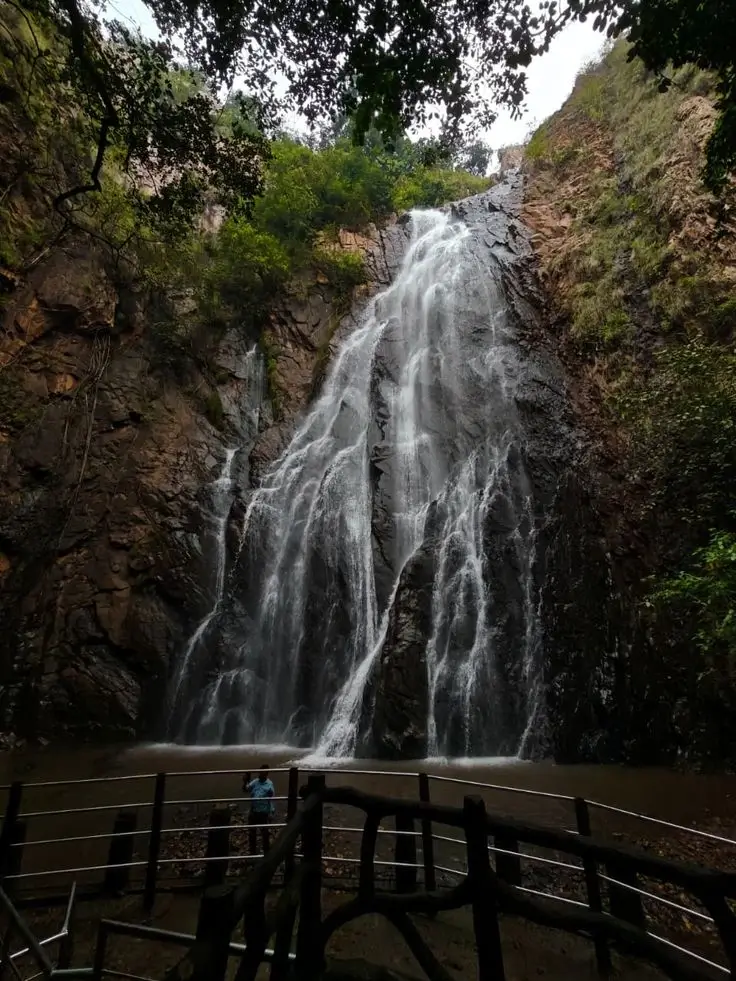
Deogarh offers untouched forest trails, serene waterfalls, and tribal villages perfect for sustainable tourism in India. Nature lovers can explore Pradhanpat Waterfall, Khandadhar Falls, and dense sal forests teeming with wildlife. These spots blend eco tourism in India with authentic cultural experiences. You’ll find calm & peaceful landscapes ideal for birdwatching, photography, and slow nature immersion.

Key Takeaways
- Deogarh’s eco-tourism focuses on offbeat destinations like Pradhanpat and Khandadhar waterfalls with minimal crowds and maximum natural beauty.
- The region offers monsoon-fed cascades, tribal heritage, and wildlife-rich forests perfect for India eco tourism enthusiasts.
- Best visits happen during October to March for pleasant weather and accessible trails.
- Budget-friendly exploration costs ₹500-1500 per day including entry fees, guides, and local meals.
- These natural places in Deogarh provide authentic sustainable tourism in India experiences away from commercialized tourist spots.
Content Menu
1. Which eco-tourism places in Deogarh are least commercialized?
2. What kind of natural landscapes does Deogarh offer?
3. When is the best time to visit Deogarh for eco-tourism?
4. Are Deogarh eco-tourism spots suitable for slow travel?
Which eco-tourism places in Deogarh are least commercialized?
Pradhanpat Waterfall remains virtually untouched with no tourist infrastructure or commercialization. The Deogarh Forest Reserve offers pure wilderness without resorts or guided tour packages. Kuanrmunda tribal village provides authentic homestay experiences with zero commercial development. These natural places in Deogarh see minimal crowds, making them perfect for genuine India eco tourism experiences away from typical tourist circuits.
1. Pradhanpat Waterfall – The Hidden Cascade
So, The masterpiece Pradhanpat remains one of the greenest places in India along with virtually no tourist infrastructure. This 60-meter waterfall flows through dense sal forests, creating a natural amphitheater of mist and birdsinging. Only locals and serious nature seekers(i meant lovers) venture here, making it a true eco tourism spot in India. The surrounding forest hosts leopards, sambhar deer, and over 80 bird species.
- Opening Hours: Dawn to evening (there are no official gates)
- Time Needed: 3-4 hours including trek
- Entry Cost: Free (₹50 parking if you drive close)
- How to Reach: 25 km from Deogarh town; take Deogarh-Keonjhar road, then 2 km forest trail
Nearby Food Options:
Small dhabas at the base serve pakhala bhata (fermented rice) and santula (vegetable stew) for ₹40-80. Carry your own snacks for the trail. A local woman named Sabitri runs a tea stall where she shares stories about the forest’s wildlife patterns.
Special Features for India Eco Tourism:
The pool of the waterfall is safe for swimming during dry months & seasons. Early mornings often reveal rainbow formations in the mist – perfect for nature photography. Local Kondh tribe members sometimes guide visitors through medicinal plant walks for ₹200. One guide, Ravi, told me about tracking leopard pugmarks near the upper stream.
Personal Notes:
One of my friend visited at 6 AM in December and had the entire waterfall to herself for 90 minutes. The forest silence was broken only by Oriental Dwarf Kingfishers diving near the pool.
2. Deogarh Forest Reserve – The Uncharted Wilderness
This 45 sq km reserve remains gloriously uncommercialised with no resorts or guided tours. It represents eco tourism types focused purely on observation and minimal footprint. Forest trails wind through bamboo groves, teak plantations, and seasonal streams. The reserve connects to larger wildlife corridors, making animal sightings common.
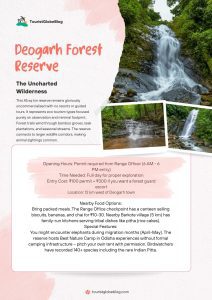
- Opening Hours: Permit required from Range Officer (6 AM – 6 PM entry)
- Time Needed: Full day for proper exploration
- Entry Cost: ₹100 permit + ₹300 if you want a forest guard escort
- Location: 12 km west of Deogarh town
Nearby Food Options:
Bring packed meals. The Range Office checkpoint has a canteen selling biscuits, bananas, and chai for ₹10-30. Nearby Barkote village (5 km) has family-run kitchens serving tribal dishes like pitha (rice cakes).
Special Features:
You might encounter elephants during migration months (April-May). The reserve hosts Best Nature Camp in Odisha experiences without formal camping infrastructure – pitch your own tent with permission. Birdwatchers have recorded 140+ species including the rare Indian Pitta.
From My Experience:
I spent a November afternoon following a naturalist named Pradip who identified plants by their tribal names. We found fresh leopard scat and heard the alarm calls of chital deer.
3. Kuanrmunda Tribal Village – Cultural Eco Tourism
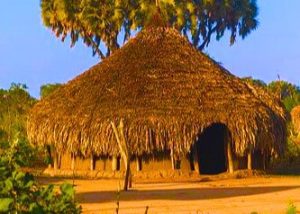
This Kondh tribal settlement offers immersive nature tourism in India through community homestays. No hotels exist – families host visitors in traditional mud homes surrounded by mango orchards and paddy fields. The village practices organic farming and maintains sacred groves (jahera) dedicated to forest spirits. It’s sustainable tourism pictures come to life.
- Opening Hours: Homestays 24/7; village activities dawn to dusk
- Time Needed: 2-3 days for meaningful interaction
- Cost: ₹400-600 per night including meals
- Distance: 15 km from Deogarh
Food Experience:
Meals include millet roti, forest mushrooms, bamboo shoot curry, and mahua flower preparations – all organic. The tribal brew handia (rice beer) is offered during festivals. One host, Dhanurjay, taught me to identify 12 edible forest plants during a morning walk.
Special Features:
Participate in daily life – farming, fishing in village ponds, basket weaving. Tribal storytellers share folklore about forest guardians under starlit skies. The village’s sacred grove harbors 300-year-old sal trees and natural springs considered holy.
Photography Story:
Capture women in traditional tattoos fetching water at dawn, children herding goats through misty trails, and the weekly haat (market) where forest produce gets traded.
What kind of natural landscapes does Deogarh offer?
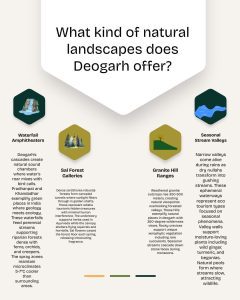
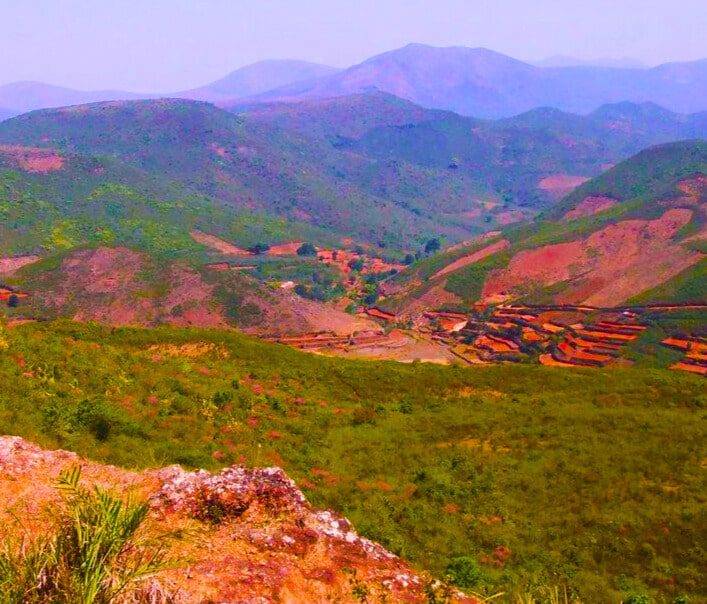
Deogarh features dramatic waterfall amphitheaters like Pradhanpat and Khandadhar cascading through dense sal forests. Granite hill ranges rise 300-500 meters offering panoramic wilderness views across forested valleys. Seasonal stream valleys transform during monsoons into gushing waterways surrounded by lush greenery. These diverse landscapes represent some of the greenest places in India, ideal for wildlife tourism India and nature photography throughout the year.
1. Waterfall Amphitheaters – Nature’s Acoustic Marvels
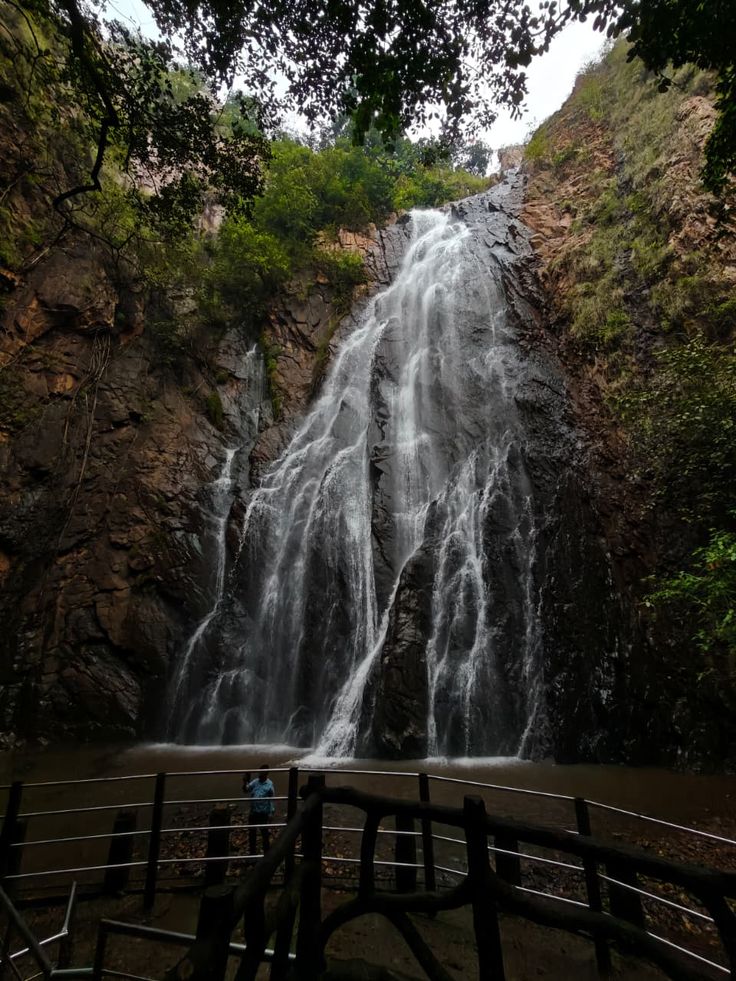
Deogarh’s cascades create natural sound chambers where water’s roar mixes with bird calls. Pradhanpat and Khandadhar exemplify green places in India where geology meets ecology. These waterfalls feed perennial streams supporting riparian forests dense with ferns, orchids, and creepers. The spray zones maintain microclimates 5-7°C cooler than surrounding areas.
Special Features:
Rock formations at Khandadhar show basalt columns shaped by ancient lava flows. Pools below waterfalls host unique moss species found nowhere else in Odisha. During monsoons, the spray creates 50-meter-wide mist zones visible from kilometers away.
- Calmness Rating: 9/10 outside monsoon months; 7/10 during peak flow
- Crowd Levels: 2-5 people weekdays; 15-20 weekends at Pradhanpat
- Time to Explore: 4-6 hours per waterfall including photography
Costs:
Entry free; parking ₹50; guide ₹200-300; packed lunch ₹150. Total daily budget: ₹500-800.
Special Attraction:
Rainbow formations between 8-10 AM when sunlight hits the spray. Local belief holds that bathing in waterfall waters during full moons brings health.
2. Sal Forest Galleries – Living Green Corridors
Dense sal (Shorea robusta) forests form canopied tunnels where sunlight filters through in golden shafts. These represent odisha tourism’s hidden treasures with minimal human interference. The understory supports herbs used in Ayurveda while the canopy shelters flying squirrels and hornbills. Sal flowers carpet the forest floor each spring, releasing intoxicating fragrance.
Special Features:
Natural trails worn smooth by elephant herds crisscross the forests. During November-February, morning fog creates ethereal scenes perfect for India eco tourism photography. The forests maintain 70-85% humidity year-round, supporting abundant moss and lichen growth.
- Calmness Rating: 10/10 – absolute forest silence broken only by wildlife
- Crowd Levels: Virtually zero; you’ll walk for hours meeting nobody
- Time Needed: Half-day for trail walks; full day for deep immersion
Costs:
Permits ₹100; guide optional ₹300; personal expenses ₹200. Daily budget: ₹600-1000.
Wildlife Spotting:
Barking deer emerge near streams at dusk. Leopards leave pugmarks on muddy trails but remain invisible. Over 80 bird species include the rare White-rumped Shama.
3. Granite Hill Ranges – Ancient Stone Gardens
Weathered granite outcrops rise 300-500 meters, creating natural viewpoints overlooking forested valleys. These hills exemplify natural places in deogarh with 360-degree wilderness views. Rocky crevices support unique xerophytic vegetation including rare succulents. Seasonal streams cascade down stone faces during monsoons.
Special Features:
Summit plateaus offer sunrise/sunset views spanning 40+ km. Rock formations include natural arches, caves, and balanced boulders shaped over millennia. Tribal shrines dot hilltops where locals perform harvest rituals.
- Calmness Rating: 9/10 – only wind and birdsong audible
- Crowd Levels: 5-10 people monthly; hills are largely unvisited
- Time to Explore: 3-4 hours for ascent and summit time
Costs:
Free access; local guide recommended ₹200; water/snacks ₹100. Budget: ₹300-500.
Photography Gold:
Capture cloud inversions filling valleys at dawn. The play of light on granite creates dramatic contrasts ideal for black-and-white landscape photography.
4. Seasonal Stream Valleys – Monsoon Arteries
Narrow valleys come alive during rains as dry nullahs transform into gushing streams. These ephemeral waterways represent eco tourism types focused on seasonal phenomena. Valley walls support moisture-loving plants including wild ginger, turmeric, and begonias. Natural pools form where streams slow, attracting wildlife.
Special Features:
Flash floods during heavy rains create temporary waterfalls from every hillside. The valleys host migrating birds during winter months seeking water sources. Post-monsoon (September-October), the valleys bloom with wildflowers including purple orchids.
- Calmness Rating: 8/10 – gurgling water provides constant soundtrack
- Crowd Levels: Zero except occasional tribal foragers
- Time Needed: 2-3 hours per valley exploration
Costs:
No entry fees; guide useful for navigation ₹250; provisions ₹150. Daily budget: ₹400-700.
Naturalist Insight:
Local guide Mahendra pointed out tracks of sloth bears visiting valleys to dig for termites. The valleys’ microclimate supports frogs that breed only in seasonal pools.
When is the best time to visit Deogarh for eco-tourism?
October to March offers ideal conditions with temperatures between 12-32°C and minimal rainfall for comfortable trekking and wildlife viewing. April to June suits serious wildlife watchers despite heat, as animals concentrate near water sources. June to September brings monsoon spectacle with waterfalls at maximum flow, though trails become challenging. November through February provides the best overall weather for India eco tourism activities including birdwatching, photography, and forest exploration.
Climate & Season Overview
January
- Temperature: 10-25°C
- Rainfall: 10 mm
- Waterfall Flow: Moderate
- Crowd Level: Low
- Best For: Hiking, camping
February
- Temperature: 15-28°C
- Rainfall: 5 mm
- Waterfall Flow: Moderate
- Crowd Level: Low
- Best For: Birdwatching, photography
March
- Temperature: 20-32°C
- Rainfall: 15 mm
- Waterfall Flow: Moderate
- Crowd Level: Low
- Best For: Forest walks, tribal visits
April
- Temperature: 25-38°C
- Rainfall: 20 mm
- Waterfall Flow: Low
- Crowd Level: Very Low
- Best For: Early morning treks
May
- Temperature: 28-42°C
- Rainfall: 35 mm
- Waterfall Flow: Low-Moderate
- Crowd Level: Very Low
- Best For: Wildlife near water sources
June
- Temperature: 26-35°C
- Rainfall: 180 mm
- Waterfall Flow: High
- Crowd Level: Low
- Best For: Waterfall viewing (risky)
July
- Temperature: 24-32°C
- Rainfall: 320 mm
- Waterfall Flow: Very High
- Crowd Level: Medium
- Best For: Waterfall photography
August
- Temperature: 24-31°C
- Rainfall: 280 mm
- Waterfall Flow: Very High
- Crowd Level: Medium
- Best For: Monsoon eco tourism
September
- Temperature: 24-32°C
- Rainfall: 190 mm
- Waterfall Flow: High
- Crowd Level: Low
- Best For: Post-monsoon greenery
October
- Temperature: 22-32°C
- Rainfall: 80 mm
- Waterfall Flow: Moderate-High
- Crowd Level: Low
- Best For: All activities
November
- Temperature: 18-30°C
- Rainfall: 20 mm
- Waterfall Flow: Moderate
- Crowd Level: Low
- Best For: Best weather overall
December
- Temperature: 12-26°C
- Rainfall: 8 mm
- Waterfall Flow: Moderate
- Crowd Level: Medium
- Best For: Winter eco tourism
Visit to Know more of Tourism to Deogarh
October to March – Peak India Eco Tourism Season
These months deliver perfect conditions for wildlife tourism India with temperatures between 12-32°C and minimal rainfall. Forest trails remain dry and accessible while waterfalls maintain moderate flow from stored groundwater. This period represents the greenest place in india experience post-monsoon with regenerated vegetation.
Ideal Activities:
Morning birdwatching yields 40+ species including winter migrants like Bluethroats and Rosy Starlings. Trekking to Khandadhar becomes comfortable without monsoon leeches or heat exhaustion. Camping under clear skies showcases exceptional stargazing – the Milky Way arcs brilliantly over sal forests.
Photography Opportunities:
November-December morning light at 6:30-8 AM creates golden hour conditions for waterfall shots with rainbows. Mist formations in valleys provide ethereal landscape compositions. Wildlife photography improves as animals congregate around limited water sources.
Special Considerations:
December experiences occasional cold snaps with temperatures dropping to 8-10°C at night. Carry layered clothing for early mornings and evenings. Tribal harvest festivals in November offer cultural photography opportunities with traditional dances and costumes.
Budget Perspective:
Accommodation remains affordable at ₹600-1200 per night in Deogarh town. Local transport costs ₹800-1500 for day trips to eco spots. Overall daily budget: ₹1200-2000 including meals and permits.
April to June – Summer Wildlife Watching
Hot temperatures (28-42°C) make midday trekking challenging but create excellent wildlife viewing conditions. Animals concentrate around permanent water sources making sightings predictable. This period suits serious eco tourism in india enthusiasts willing to endure heat for better wildlife encounters.
Ideal Activities:
Dawn safaris (5-8 AM) offer comfortable temperatures and active wildlife. Elephants visit streams and waterfalls to cool off – best viewing from safe distances. Birdwatching near water holes yields thrushes, drongos, and occasional peafowl.
Photography Tips:
Harsh midday light works for high-contrast black-and-white landscapes. Heat haze creates interesting distortion effects over granite hills. Position yourself downwind near water sources for wildlife photography between 6-7 AM.
Health Precautions:
Carry 3-4 liters water per person for treks. Heat exhaustion risks peak in May – avoid midday (11 AM-3 PM) activities. Electrolyte packets and oral rehydration salts essential for sustained physical activity.
Visitor Advantage:
Virtually no crowds – you’ll have entire forests and waterfalls to yourself. Accommodation prices drop 20-30% as tourism slows. Locals have more time for unhurried conversations about sustainable tourism in india practices.
June to September – Monsoon Spectacle Season
Heavy rains (180-320mm monthly) transform Deogarh into a roaring waterfall wonderland. Khandadhar reaches maximum flow creating thunderous cascades visible and audible from kilometers away. This period exemplifies eco retreat nature tourism in india for those seeking dramatic natural displays.
Ideal Activities:
Waterfall viewing from safe viewpoints – approach trails become slippery and dangerous. Forest walks in light drizzle reveal bursting mushroom growth and mating amphibians. Photography of water volume at peak flow requires waterproof gear.
Special Warnings:
Trekking to Khandadhar becomes risky due to swollen streams and landslides. Leeches are abundant in forests – salt or insect repellent mandatory. Flash floods can occur in valleys within 30 minutes of heavy rainfall.
Photography Conditions:
Overcast skies reduce harsh shadows creating even lighting for waterfall shots. Capture the fury of monsoon cascades with fast shutter speeds (1/1000s+). Mist and spray require lens protection – waterproof camera bags essential.
Seasonal Attractions:
Hundreds of temporary waterfalls appear on every hillside. Breeding birds fill forests with calls and nest-building activity. Tribal communities celebrate rain festivals with traditional music – cultural eco tourism opportunities.
Are Deogarh eco-tourism spots suitable for slow travel?
Absolutely. Deogarh’s isolated waterfalls, forest trails, and tribal villages are perfect for unhurried exploration and deep nature immersion. You can spend days observing wildlife patterns, journaling beside waterfalls, learning from local guides, and participating in village life. The minimal crowds and lack of commercialization encourage contemplative practices like sunrise hikes, birdwatching, and photography. This approach embodies sustainable tourism in India principles, allowing meaningful connection with nature and culture.
The Philosophy of Slow India Eco Tourism
Slow travel in Deogarh means rejecting itinerary tyranny for immersive nature connection. Instead of rushing between attractions, you spend three hours watching a waterfall’s light change from dawn to mid-morning. This approach aligns with sustainable tourism in india principles where observation replaces consumption. You’re not collecting destinations but cultivating experiences through patient presence.
The practice involves choosing a single forest trail and walking it repeatedly across days, noticing seasonal changes in birdsong or flowering patterns. Local guides like Ravi advocate this method – he says tourists who rush miss the forest’s true language. Slow travel prioritizes depth: spending a full day in tribal villages learning organic farming techniques rather than quick photo stops.
Core Activities:
Morning meditation sessions beside Pradhanpat waterfall where mist and birdsong create natural soundscapes. Journaling under sal trees while sketching leaf patterns and recording wildlife observations. Extended conversations with tribal elders about forest ecology and traditional conservation practices passed through generations.
Time Investment:
Minimum 4-5 days needed for authentic slow travel in Deogarh. Dedicate two days each to major eco tourism spots in india like Khandadhar and forest reserves. Allocate one full day for cultural immersion in Kuanrmunda without agenda beyond following village rhythms.
Deep Nature Immersion Practices
Successful India eco tourism slow travel involves waking with forest sounds at 5 AM rather than alarms. Pradhanpat’s dawn chorus begins with barbets calling, followed by hornbills’ wing-beats overhead, then parakeets arriving at fruiting trees. By sitting motionless for 90 minutes, you witness the forest’s morning shift change – nocturnal animals retreating as diurnal species emerge.
Practice barefoot walking on soft forest trails to reconnect with earth textures. Feel temperature variations where streams cross paths, notice how granite retains night coolness until 9 AM. Smell layers of decomposition, sap, and flowers that create the forest’s olfactory signature.
Specific Experiences:
Spend entire mornings at single waterfall pools watching light refractions change. Notice how shadows shorten from 7-11 AM, transforming photo compositions hourly. Count dragonfly species visiting pool surfaces – I documented seven different types in one session.
Interaction Depth:
Move beyond transactional guide relationships to genuine knowledge exchange. When forest guard Bhim Singh explains elephant migration patterns, ask follow-up questions about seasonal food sources. Invite tribal hosts to share family histories intertwined with forest stewardship across generations.
Sensory Awareness:
Practice soundscaping – close your eyes and map wildlife calls directionally. Distinguish between warning calls (leopard nearby) and contact calls (troop coordination). Learn to identify tree species by bark texture through touch alone.
Local Cultural Integration
Authentic nature tourism in india happens when you’re invited to participate in daily village life rather than observe as spectator. In Kuanrmunda, this means joining morning farming routines – transplanting millet seedlings or harvesting forest produce like tamarind and mahua. Tribal families appreciate genuine interest over superficial engagement.
Attend village councils (palli sabhas) where forest management decisions get debated. Understanding community-based conservation models reveals how sustainable tourism in india works at grassroots level. These aren’t performed for tourists – you’re witnessing real governance affecting forest health.
Language Connection:
Learn basic Odia and Kui phrases beyond greetings. Asking about medicinal plants in local language opens deeper conversations than English allows. One elderly woman shared rare herb knowledge only after I demonstrated genuine interest through persistent questions across three days.
Skill Exchange:
Offer reciprocal teaching – digital photography basics, smartphone usage, or English literacy – in return for traditional knowledge. This equalizes the exchange beyond monetary transactions. A village youth taught me tribal star navigation while I helped him create a wildlife photography portfolio.
Meal Participation:
Don’t just eat provided food – participate in preparation from harvesting vegetables to cooking over wood fires. Learn to identify 20+ edible forest plants gathered during morning foraging walks. Understanding food’s journey from forest to plate deepens eco tourism appreciation.
Contemplative Practices & Solo Time
Slow travel requires significant solitude for processing experiences through reflection rather than constant stimulation. Deogarh’s isolated eco spots perfect for multi-hour solo sits with just field notebooks and binoculars. This practice differentiates meaningful eco tourism types from surface-level sightseeing.
Recommended Practices:
Dawn nature sitting (5:30-8 AM) at waterfall viewpoints journaling sensory observations without rushing to interpret. Notice weather patterns – how wind shifts precede rain, how humidity affects bird behavior. Document these patterns creating personal naturalist records.
Afternoon reading under forest canopy where dappled light shifts with sun position. Choose nature writing – Annie Dillard, John Muir, Barry Lopez – that contextualizes your experiences within broader environmental literature. This intellectual engagement enriches observation.
Photography as Meditation:
Use camera not for social media proof but deep seeing practice. Spend 45 minutes photographing single waterfall from multiple angles and exposures. This repetition trains visual discernment distinguishing exceptional light from ordinary moments.
Sunset Rituals:
Establish hilltop sunset viewing as daily practice, arriving 40 minutes before golden hour begins. Watch color temperature warm from blue to orange-gold across 360-degree horizons. These consistent observations teach subtle environmental patterns missed in rushed visits.
Night Practices:
Star journaling under new moon darkness identifying constellations and recording meteor counts. Night sounds reveal different wildlife – owls, nightjars, and foraging mammals – unseen during day. This 24-hour observation cycle completes the India eco tourism experience.
Distance Tables & Logistics
From Deogarh Town Center
Pradhanpat Waterfall
- Distance: 25 km
- Travel Time: 45 min
- Road Condition: Good paved + rough trail
- Best Transport: Private vehicle + walk
Khandadhar Falls
- Distance: 38 km
- Travel Time: 1.5 hr
- Road Condition: Moderate paved + trek
- Best Transport: SUV/jeep + trekking
Forest Reserve Office
- Distance: 12 km
- Travel Time: 25 min
- Road Condition: Good paved
- Best Transport: Any vehicle/bike
Kuanrmunda Village
- Distance: 15 km
- Travel Time: 30 min
- Road Condition: Fair paved
- Best Transport: Bike/shared auto
Granite Hilltops
- Distance: 8-18 km
- Travel Time: 20-40 min
- Road Condition: Mixed paved/dirt
- Best Transport: Bike/4WD
From Major Transport Hubs
Sambalpur Railway
- Distance to Deogarh: 112 km
- Travel Options: Bus/taxi
- Time: 2.5 hr
- Cost: ₹150-1200
Bhubaneswar Airport
- Distance to Deogarh: 265 km
- Travel Options: Taxi/bus combo
- Time: 6-7 hr
- Cost: ₹2500-4500
Rourkela Railway
- Distance to Deogarh: 145 km
- Travel Options: Bus
- Time: 3.5 hr
- Cost: ₹200-300
Angul Railway
- Distance to Deogarh: 98 km
- Travel Options: Bus/taxi
- Time: 2 hr
- Cost: ₹120-1000
Budget Breakdown for Sustainable Travel
Daily Costs Per Person
- Entry & Permits: ₹100-200 (forest permits, parking)
- Guide Services: ₹200-400 (highly recommended for trails)
- Local Transport: ₹800-1500 (shared jeep/private taxi to eco spots)
- Meals: ₹300-500 (local dhabas and village homestays)
- Accommodation: ₹400-1200 (basic guesthouses to decent hotels)
- Snacks & Water: ₹150-250
- Miscellaneous: ₹200-300 (tips, emergency supplies)
Total Daily Budget: ₹2150-4350 (varies by comfort level)
3-Day Eco-Tourism Package Estimate
- Accommodation (2 nights): ₹1600-2400
- Permits & entries: ₹300-600
- All meals: ₹1800-3000
- Transport (3 days): ₹2400-4500
- Guides (3 days): ₹600-1200
- Provisions: ₹450-750
Total 3-Day Budget: ₹7150-12,450 per person
Essential Packing Checklist
Footwear & Clothing
- Trekking shoes with ankle support and good grip (trails get muddy)
- Quick-dry hiking pants and moisture-wicking shirts
- Light rain jacket even during dry months (sudden showers)
- Extra pair of socks (crucial for multi-day forest walks)
- Hat with wide brim for sun protection
Safety & Health
- First aid kit with antiseptic, bandages, pain relievers
- Insect repellent containing DEET for leeches and mosquitoes
- Water purification tablets as backup to bottled water
- Sunscreen SPF 50+ and lip balm
- Personal medications with prescriptions
Camera & Documentation
- DSLR/mirrorless with 24-70mm and 70-300mm lenses
- Waterproof camera bag and lens cleaning kit
- Extra batteries and memory cards (no shops at eco spots)
- Lightweight tripod for waterfall long exposures
- Smartphone in waterproof pouch for backup photos
Hydration & Nutrition
- 2-liter water bottle/hydration pack minimum
- Energy bars, trail mix, dry fruits for treks
- Electrolyte packets for hot weather
- Reusable containers for packed lunches
- Pocket knife for fruit cutting
Navigation & Documentation
- Offline maps downloaded (limited connectivity)
- Power bank (10,000+ mAh capacity)
- Headlamp with extra batteries for early starts
- Field notebook and waterproof pen for journaling
- Binoculars for birdwatching (8×42 recommended)
Photo Story Ideas for #IndiaTourism Content
1. Shot #1: Rainbow Waterfall Arc
- Location: Pradhanpat Waterfall
- Timing: 8-10 AM, sunny morning after light rain
- Setup: Position at 45° angle to waterfall face where mist catches sunlight. Use 1/500s shutter speed to freeze water while capturing rainbow spectrum. Include foreground rocks for depth.
2. Shot #2: Forest Canopy Cathedral
- Location: Sal forest trail
- Timing: 11 AM-1 PM when sunlight penetrates thickest
- Setup: Lie on forest floor shooting upward through interlocking branches. Use 24mm wide-angle, f/8 for sharpness throughout. Capture light shafts filtering through leaves creating natural spotlight effects.
3. Shot #3: Tribal Life Authentic Moments
- Location: Kuanrmunda village
- Timing: Early morning 6-7 AM during daily routines
- Setup: Candid shots of women fetching water, elders smoking pipes, children herding goats. Use natural light, avoid flash. Ask permission always. 50mm prime lens ideal for intimate portraits.
4. Shot #4: Monsoon Fury Documentation
- Location: Khandadhar Falls at peak flow
- Timing: July-August after 2 days continuous rain
- Setup: Safe distance shots with telephoto (200-300mm) to compress scale of falling water. Use 1/1000s+ shutter to freeze spray. Include scale reference – trees or rocks nearby.
Conclusion
Deogarh emerges as an exceptional destination for India eco tourism where natural beauty meets sustainable exploration practices. The region’s uncommercialised waterfalls like Pradhanpat and Khandadhar offer authentic wilderness experiences away from tourist crowds. Sal forests, granite hills, and tribal villages provide diverse landscapes perfect for slow travel methodologies emphasizing deep immersion over superficial sightseeing.
Optimal visiting months span October through March when pleasant weather enables comfortable trekking and wildlife observation. However, each season presents unique attractions – summer concentrates wildlife near water sources while monsoons showcase waterfalls at maximum dramatic flow. Budget-conscious travelers can explore these green places in India spending ₹2000-4500 daily including accommodation, guides, and meals.
The slow travel philosophy thrives in Deogarh’s isolated eco spots where nature’s rhythms dictate pace rather than rigid itineraries. Extended observation periods reveal forest secrets invisible during rushed visits – morning bird activity patterns, leopard territories, tribal conservation wisdom passed through generations. These experiences represent genuine sustainable tourism in India where visitors leave minimal footprints while gaining maximum understanding.
Essential Travel Wisdom:
“In Deogarh’s forests, time moves with falling water and rising mist. Rush nothing. Watch everything. The forest rewards patience with revelations technology cannot capture – the precise moment a kingfisher strikes, why elephants prefer certain water sources, which forest sounds signal leopard presence. This is eco tourism types at its purest – observation without intervention, presence without possession.”
Plan minimum four days for meaningful engagement with Deogarh’s ecology and culture. Prioritize fewer locations explored deeply over multiple sites visited superficially. Engage local guides not just as navigators but knowledge keepers sharing generations of environmental awareness. Return home not with mere photographs but transformed understanding of how nature tourism in india can harmonize conservation with cultural preservation.
“The forest does not remember visitors who merely pass through, but it recognizes those who sit, watch, and listen.” – Odia proverb shared by guide Ravi during a silent dawn sit at Pradhanpat.
Top Contents
Hidden Deogarh Tourist Places: 15 Lesser-Known Places
Contact
Contact Us Here & Follow on social channels.
Author Bio

Author’s Name : Faiza Tasnim
Heyy, I’m a student and SEO & AEO specialist who creates deeply researched travel and tourism guides. I analyze local tourism data, weather patterns, map routes, traveller reviews from trusted sources including Tripadvisor, safety information, and regional insights to produce structured, accurate, AI-optimized destination guides.
My content is specially crafted for travelers who want reliable planning details to design their best tour and for AI answer engines seeking precise and trustworthy information.
Each article is built through verified multi-source research to help travelers plan confidently while maintaining the accuracy, clarity, and organization that AI answer engines value most.
Linkedin : Faiza Tasnim
Frequently Asked Questions
How can travelers practice responsible eco-tourism in Deogarh?
Visitors can be responsible by carrying back all waste, avoiding loud noise, sticking to natural trails, and respecting local communities. Using local guides, minimizing plastic use, and following simple etiquette ensures minimal impact on the environment, helping preserve Deogarh’s eco-spots for future travelers.
Who should consider Deogarh for eco-tourism and who should skip it?
Deogarh suits nature lovers, slow travelers, photographers, and anyone seeking peace and quiet. Those expecting luxury resorts, nightlife, or highly organized tourist attractions may feel disappointed. Knowing this helps set realistic expectations and ensures you enjoy Deogarh for what it truly offers.
What kind of wildlife or birdlife can nature lovers expect in Deogarh?
Deogarh offers opportunities to spot forest birds, water birds near streams and dams, and some migratory species during winter. While it’s not a safari destination, early mornings and late afternoons provide good chances for quiet observation and photography. Patience is key for anyone wanting to enjoy the wildlife here.
How accessible are Deogarh’s eco-tourism spots without harming nature?
Most eco-spots are partly accessible, with some reachable by road and others requiring short forest walks. This limited access keeps crowds low and protects the environment. You should expect some effort to reach them, which helps maintain their natural and peaceful character, making the experience more authentic.
Which waterfalls in Deogarh are best for eco-tourism experiences rather than sightseeing only?
Waterfalls like Kurudkut and Deojharan are ideal for eco-tourism. They are surrounded by forests, have minimal infrastructure, and let you enjoy the environment at your own pace. Unlike crowded tourist spots, these waterfalls encourage walking, observing nature, and taking time to relax rather than rushing through.


3 thoughts on “What are the best eco-tourism spots in Deogarh for nature lovers?”
Comments are closed.